
Coal County Parole Versus Probation
Parole and probation both permit a person to live outside a prison or jail while meeting rules, but they arise at different points. Parole follows a prison term. The Oklahoma Pardon and Parole Board considers parole, while the Oklahoma Department of Corrections, or ODOC, supervises a person after parole takes effect. Probation generally comes from a court sentence and may let a defendant remain in the community instead of serving all or part of a custody term. ODOC also supervises probation cases assigned to it. Neither label means the case vanished or that every obligation ended.
A favorable Board action is not always the final release event. Home placement, stated conditions, a detainer, a consecutive sentence, paperwork, or further government action can stand between a parole recommendation and physical release. For qualifying violent cases, the Board explains that the Governor acts on a favorable recommendation. For nonviolent cases, the Board has granting authority under the applicable process. Check the later ODOC status rather than treating a docket result as the jail-door timestamp.
| Point | Parole | Probation |
|---|---|---|
| How it begins | Conditional release following a prison term | A court orders community supervision as part of a sentence |
| Key decision source | PPB docket and result, plus any further required action | Coal County District Court judgment or order |
| Supervising agency | ODOC | ODOC when assigned to state supervision |
| What proves current status | Exact ODOC status and supervising office | Court order plus exact ODOC supervision status |
| How it ends | Discharge after the remaining term and conditions end | Completion or discharge under the governing order |
- Parole
- Conditional, supervised release after part of a prison sentence.
- Probation
- Court-ordered supervision in the community under stated terms.
- Discharge
- The formal end of an ODOC term or supervision status.
- Detainer
- A request or legal hold from another authority that may prevent community release.
- Absconder
- An agency status indicating a supervised person is not compliant or cannot be located.
Verify Coal County Post-Release Supervision
Begin with an exact name and ODOC number when available. The ODOC Offender Info page is the durable official entry to Offender Lookup. It covers ODOC offenders, not every person booked into the Coal County Jail. Open the full record and preserve the agency’s words. “Parole,” “probation,” “discharged,” an institution, and a supervision office describe different legal states.
The Coal County court docket can explain a probation order, suspended term, deferred disposition, or later warrant. A PPB result can show what the Board decided. ODOC shows what correctional or supervision status followed. A released county detainee may never have an ODOC record, so a blank ODOC search does not prove that the person was never released or supervised.
- Collect the exact name, ODOC number, court case number, and known custody history.
- Search ODOC and open the full result. Compare public identity and case details before relying on it.
- Read the displayed status exactly. Do not convert parole or probation into discharge.
- Check the Coal County court case for the sentence or order that created probation.
- For parole, search the relevant month on the PPB Dockets and Results page, then verify the later ODOC status.
- Call the assigned supervision office with the name and ODOC number to ask what public status it can confirm.
The official PPB portal publishes monthly dockets and matching results. Its result codes require care. A denied action is not release. A passed or deferred matter moved to another stage. A favorable result may still await conditions or other action. The following captured Oklahoma parole docket source shows where those month-by-month records are organized.
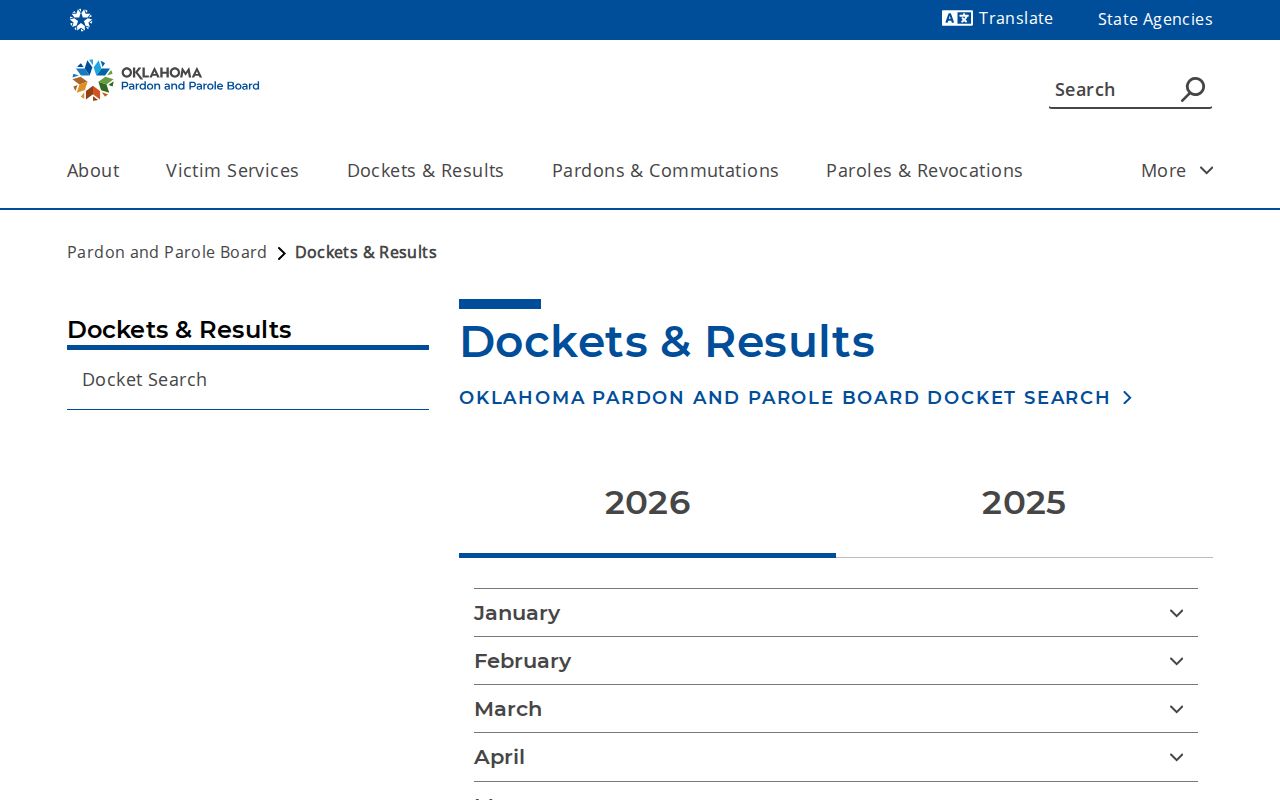
Use the ODOC number to distinguish people with similar names, then compare the result with the offender record before describing a release or Coal County supervision status.
Note: A Board result documents a decision stage, while ODOC status shows whether release and Coal County supervision later took effect.
Coal County Supervision Uses Atoka
Coal County has no separately listed ODOC probation and parole storefront. The state office directory assigns both Atoka and Coal counties to the Atoka Probation and Parole Office. This cross-county setup matters. The Coal County Sheriff manages local jail records, but it does not run ODOC parole check-ins or interpret state supervision terms. Direct assignment and reporting questions to ODOC.
The official ODOC probation and parole office list is the source for the local service area. The manifest capture below preserves that statewide directory entry.
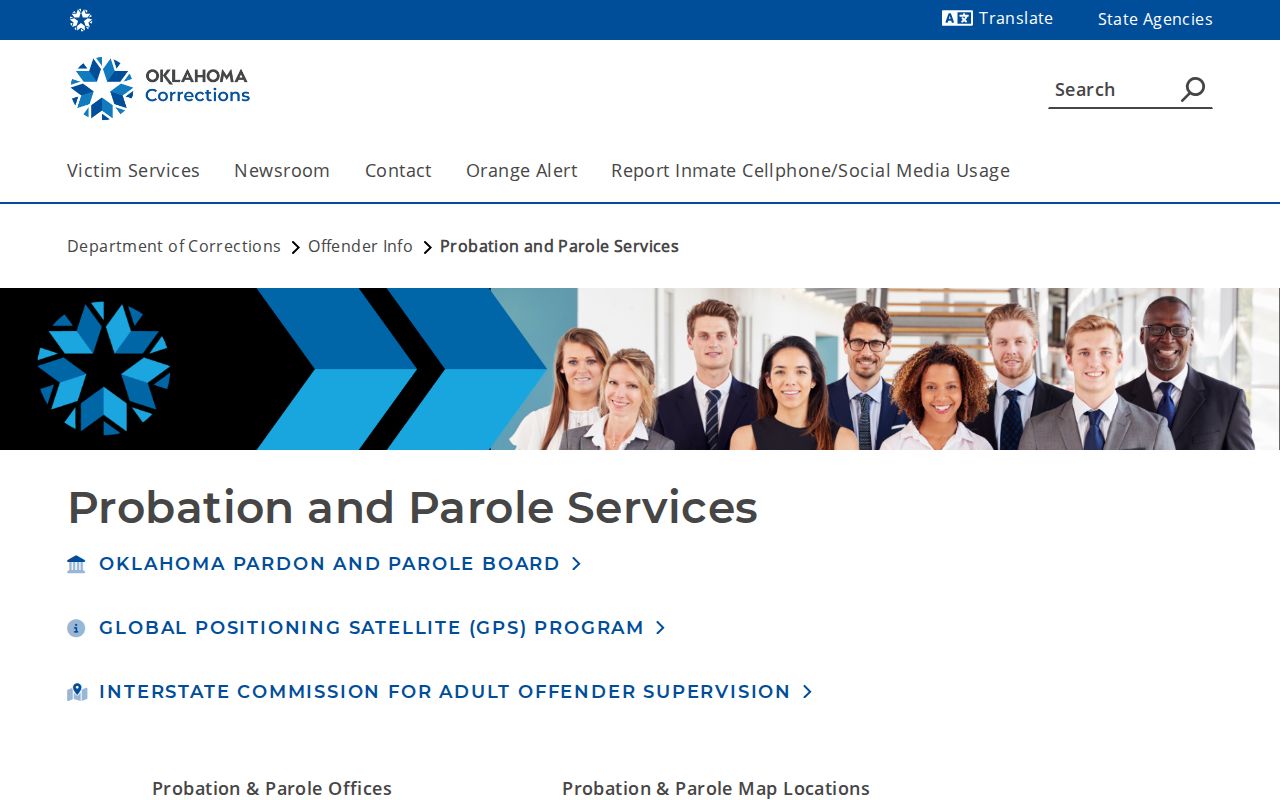
The office row provides a direct Coal County supervision route instead of sending parole questions to the jail or to a general state switchboard.
Atoka Probation and Parole Office182 East Court Street
Atoka, OK 74525
580-889-3561
Serves Atoka and Coal counties
Hours were not stated in the official office list.
Ask what may be confirmed to the public and provide exact identifiers. The office may be able to route a valid records or status question, but confidentiality rules can limit details. If the issue concerns a Board vote, use PPB. If it concerns a jail release code, use the Sheriff. If it concerns a filed probation order, use the Coal County Court Clerk.
Coal County Supervision and Warrants
Conditions are the rules attached to parole or probation. The controlling order and supervision record determine them. Common labels should not be guessed from a public status line. A parolee remains under the prison sentence while living in the community under conditions. A probationer follows the court’s terms. Violations can trigger agency action, a warrant, a revocation process, or return to custody, but only the official record establishes which event occurred.
ODOC publishes warrants@doc.ok.gov as a warrants contact. No official Coal County Sheriff absconder list was found in the research sweep. “Absconded” or a supervision warrant means the agency reports noncompliance or inability to locate the supervised person. It does not erase the prior release, change the court conviction, or by itself show that the original jail data was wrong.
The public ODOC record and agency contact should be checked again after any warrant or revocation event. Current custody may move from community supervision to a county jail, ODOC facility, or another authority. That change does not make the earlier parole record false. It means the person’s status changed.
Coal County Parole Notice Layers
Oklahoma separates automated custody alerts from the Pardon and Parole Board’s parole notification. OK VINE can provide event-driven notices for custody changes supplied by participating agencies. PPB’s victim program covers parole consideration and release-to-parole notice through its own process. Registration in one does not create registration in the other.
The PPB VINE explanation also identifies a gap: an ODOC transfer to a Department of Mental Health facility can interrupt VINE activation until return to ODOC. A VINE silence should not be treated as proof that nothing changed. Contact the responsible agency when the notice has legal or safety importance.
Use OK VINE for automated custody events and the Board’s written registration path for parole notice. Keep confirmation details. When a notice arrives, read the event type and reporting agency. A transfer alert is not a discharge, and a favorable parole action is not always proof that the person already left confinement.
Note: Coal County custody alerts and Oklahoma parole notices use separate registrations, so one enrollment cannot be assumed to cover both.
Correct Coal County Supervision Records
ODOC provides a formal route for challenging an entry in its record. DOC 060212B is titled “Request for Review of Individual Criminal History Record” and appears on the ODOC Section 06 forms page. The person identifies the disputed entry and supplies official records that support the requested review. That process is more precise than asking an unrelated search service to alter state data.
Record ownership controls the correction path. Send an ODOC incarceration, discharge, parole, or probation error to ODOC through the stated form and records channels. Send a Coal County jail booking or release error to the Sheriff’s records custodian. For a filed judgment, sentence, docket event, or probation order, contact the Coal County Court Clerk. One office cannot silently revise another agency’s record.
A correction request is not the same as sealing or expungement. A correction challenges accuracy. Sealing or expungement limits access under a court order and Oklahoma law. Keep copies of the challenged record, the official supporting document, and the agency response so the status trail remains clear.
Coal County Supervision Discharge
Parole is not full discharge. It suspends the remaining prison term under conditions while the person lives in the community. Probation also continues until the governing term ends or an authorized order changes it. The final event should be confirmed from the agency that holds the supervision record, not inferred from a missing jail listing or an old court date.
For ODOC discharge questions, Legal Services publishes osordischarges@doc.ok.gov. Ask for the actual discharge document or public field needed, with the person’s exact name and ODOC number. If access to a confidential supervision file is sought by an authorized person, ODOC provides an authorization form and applies legal access limits.
Public record access remains subject to the Oklahoma Open Records Act, Title 51 §§24A.1 and following, plus laws that protect specific fields. A public supervision or discharge fact does not make every part of a person’s file open. When an agency withholds part of a requested record, ask for the legal basis and a segregated copy containing any releasable material. Route Board decisions to PPB, ODOC records to ODOC, and filed Coal County orders to the Court Clerk.
The Coal County released inmate search and record path helps reconcile the Sheriff’s release entry, the court case, and the later ODOC trail. A concise conclusion should say what ended and what remains. “Released to parole and still supervised” is different from “discharged from ODOC,” while “probation complete” should be tied to the court or ODOC record that confirms completion.